Fuel injection
This is one of the most tricky and least simulateable parts of the pulse jet. The current system has a copper pipe like this:
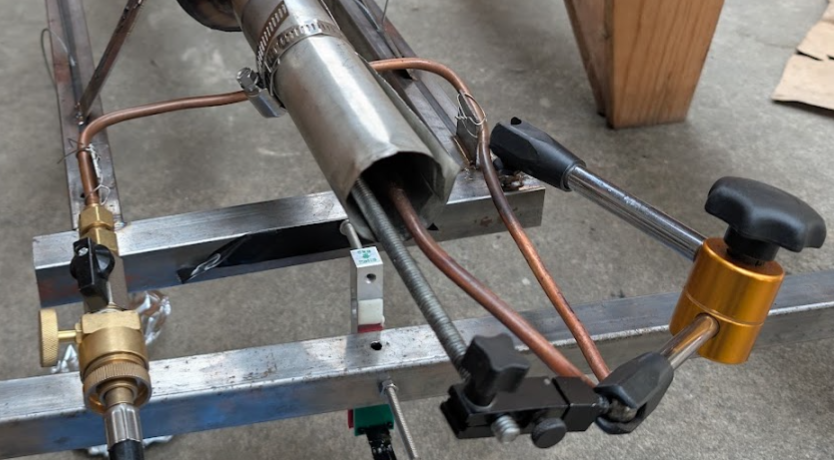
Where I have sealed off the end and drilled a through-hole with a ~2mm drill bit. This worked only kind of ok, and the pulse jet is in general not able to start without external forced air. One of the things I did which may have helped is jam a piece of wire down through the ~2mm hole so it had a smaller effective diameter in an attempt to get a narrower higher velocity jet of propane coming out on the principle that this would result in better mixing.
Imagine my suprise then finding this thesis:
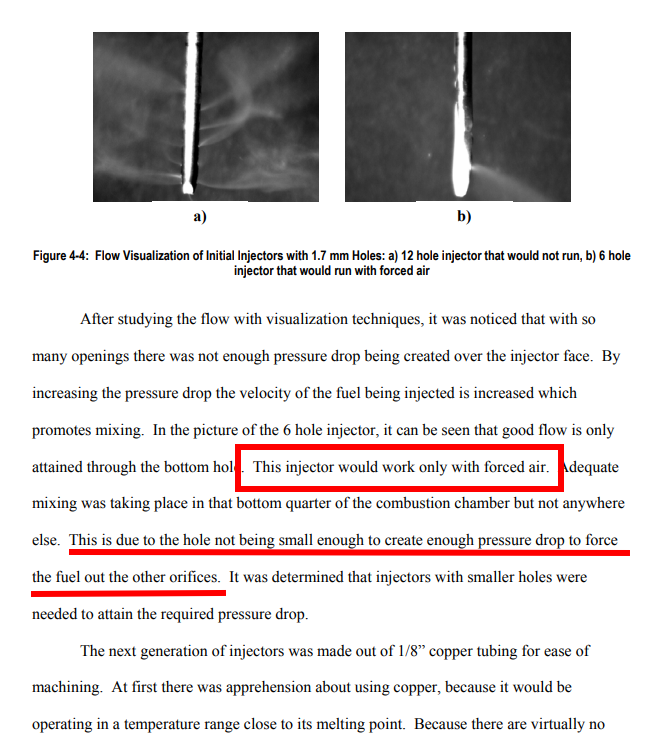
In the fuel injector section:
The conclusion of these tests was that the jet preferred to have fewer holes in the injector. It was also assumed that smaller holes would work better. A larger body injector would possibly also be beneficial as it would promote more pressure drop across the orifices rather than the injector body.
The next injector tested was a 4 hole radial injector pictured in Figure 4-9. Each of the holes were oriented in the same plane 90° apart at the bottom of the injector so that not only rotational but height location as well could be tested. The jet would not resonate without forced air with this injector. It was noticed that the propane flow rate of 4.5 SLPM used to start the jet could not be attained, because the decreased number of orifices increased the restriction too much. Forced air was required to help the small amounts of fuel being delivered to mix more effectively, and forced air helps resonance
This points further to the fuel injection being the problem! It matches the current issues quite well!