Changes
From last time:
-
Remade the linear rail entirely to have a much longer travel:
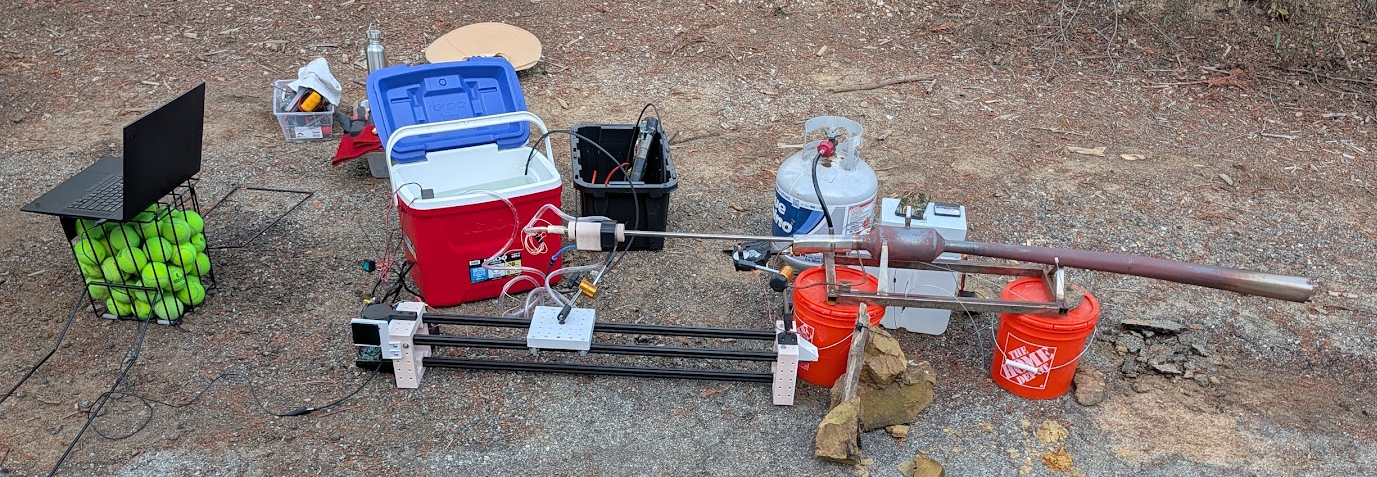 Now the pressure can be measured from the entrance of the air intake to just into the exhaust outlet
-
Electronics replaced with vibe coded pcb, courtesy claude:
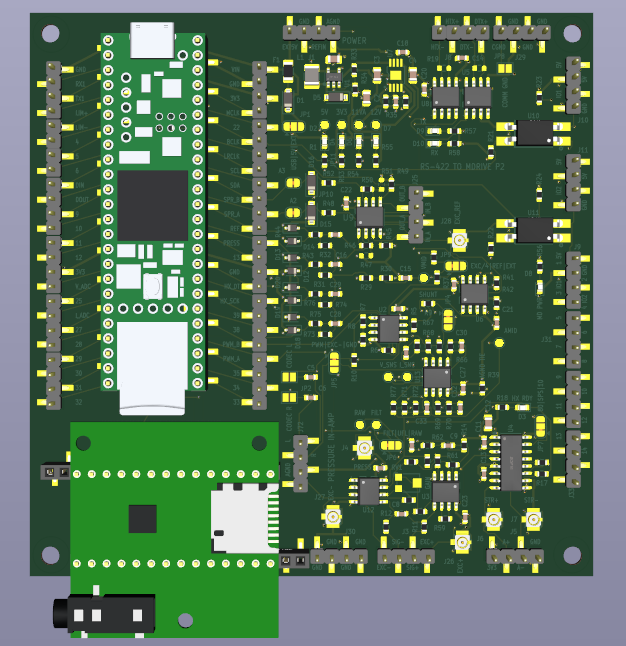 Mr Claude did a much better job with the power supply rails than the previous analog amplifer, so the SNR of the pressure sensor is much better.
- “Reference” sensor replaced with actual audio sensor rather than contact piezo mic. No problems rapidly deteriorating measurements, hopefully.
Results
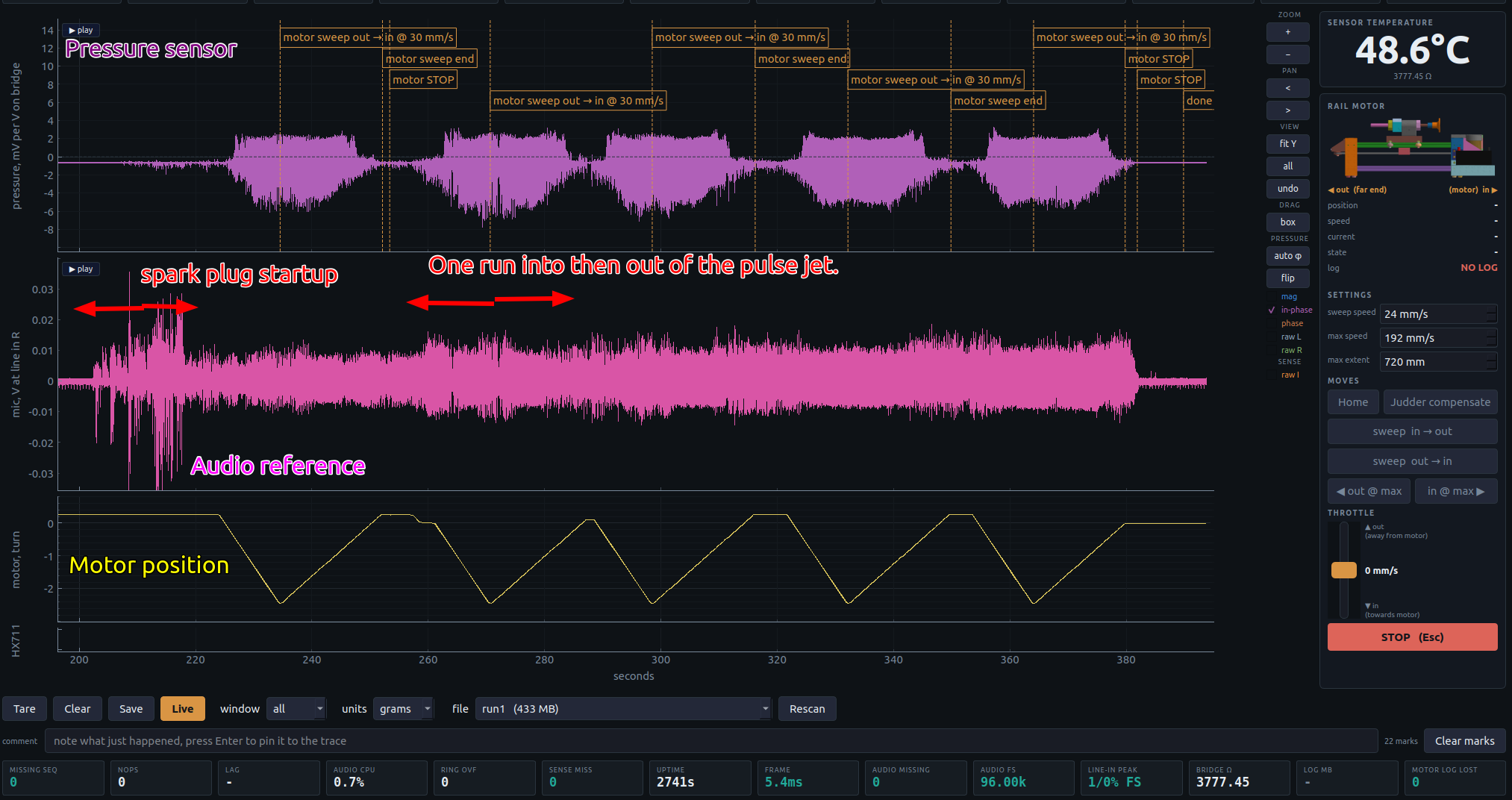
Here is one of the more successful data collection runs, as a view into the raw data. Unfortunately this time around the shop compressor was not available to provide air, so a ducted fan was used. I don’t think this was able to provide quite enough though as the operation of the pulse jet was intermittent.
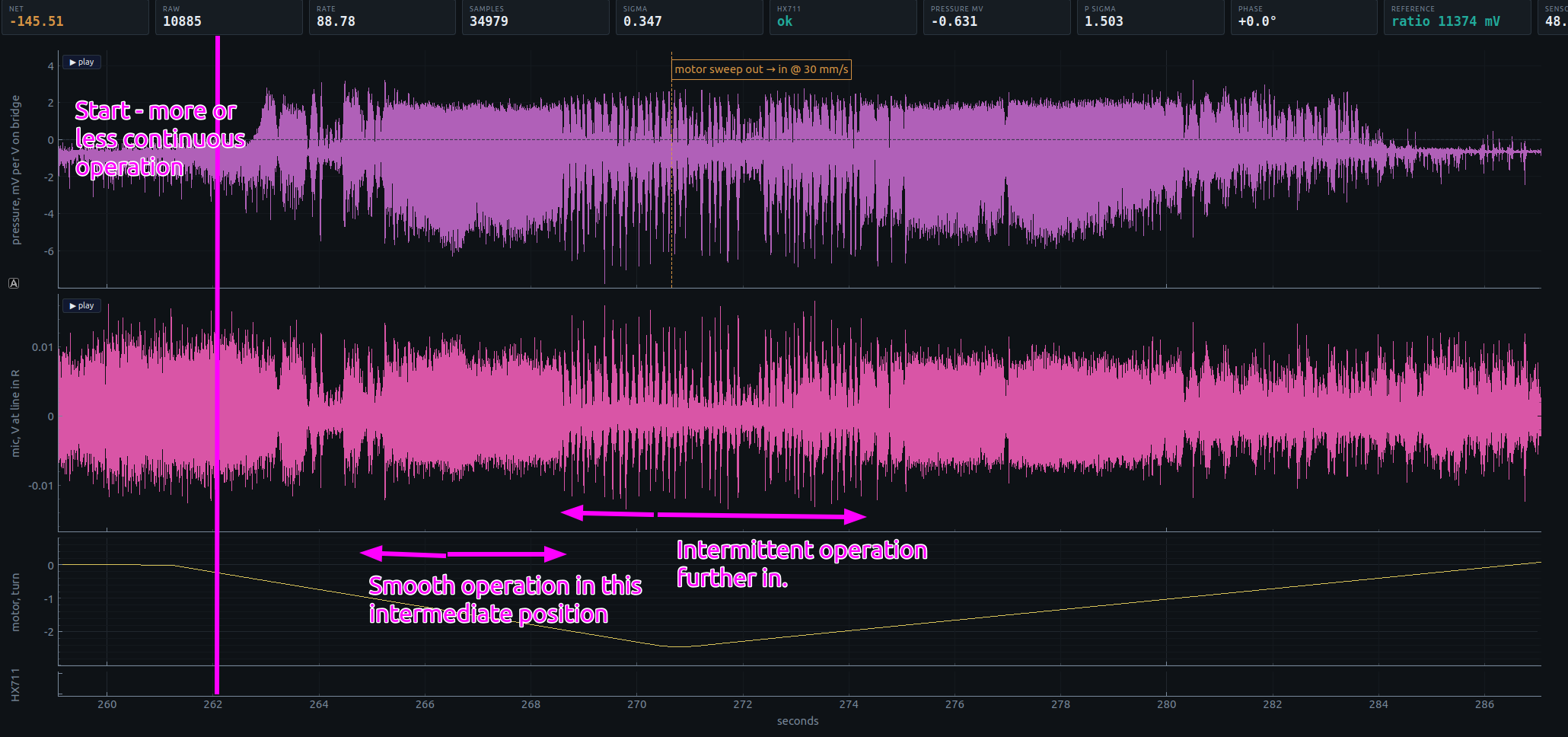
Here is a closer view into one sweep with the areas of continuous and intermittent operation laid out:
And a single such burst:
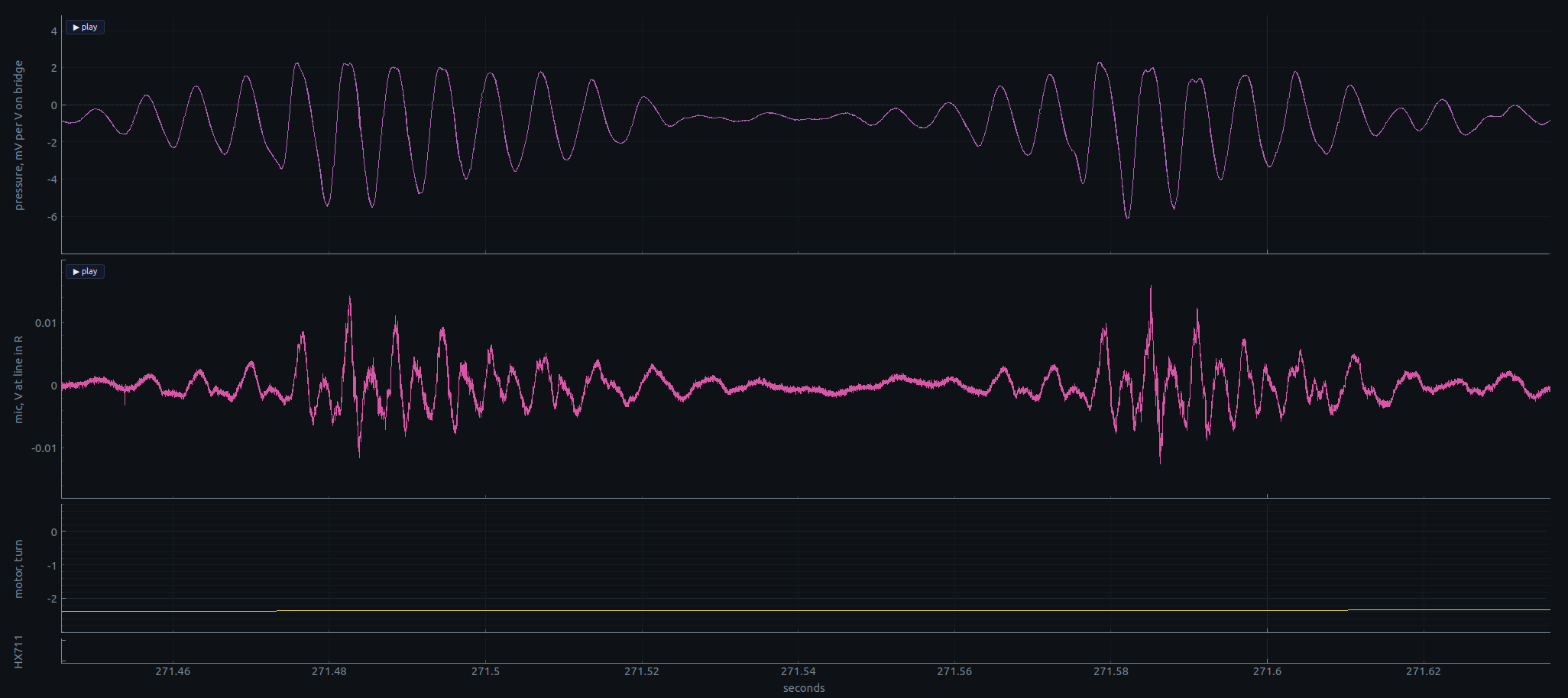
I’m not sure what’s going on here. Presumably there is some stability criteria for engine oscillation that’s not being reached. You can see though that the amplitude builds for a couple cycles. So the positive feedback required for oscillation works for some short period of time, then something causes it to fade. This is not what you would expect from an ‘underdamped’ system where you would have one big pulse and then either a decay (overdamped) or a bunch of trailing oscillations with gain <1.
Reference instability
Last time the plain old SNR of the piezo measurement was poor. This time it’s reasonably good, I think, but nonetheless the variability in the mic measurement is far higher than that of the pressure measurement. Here is an example:
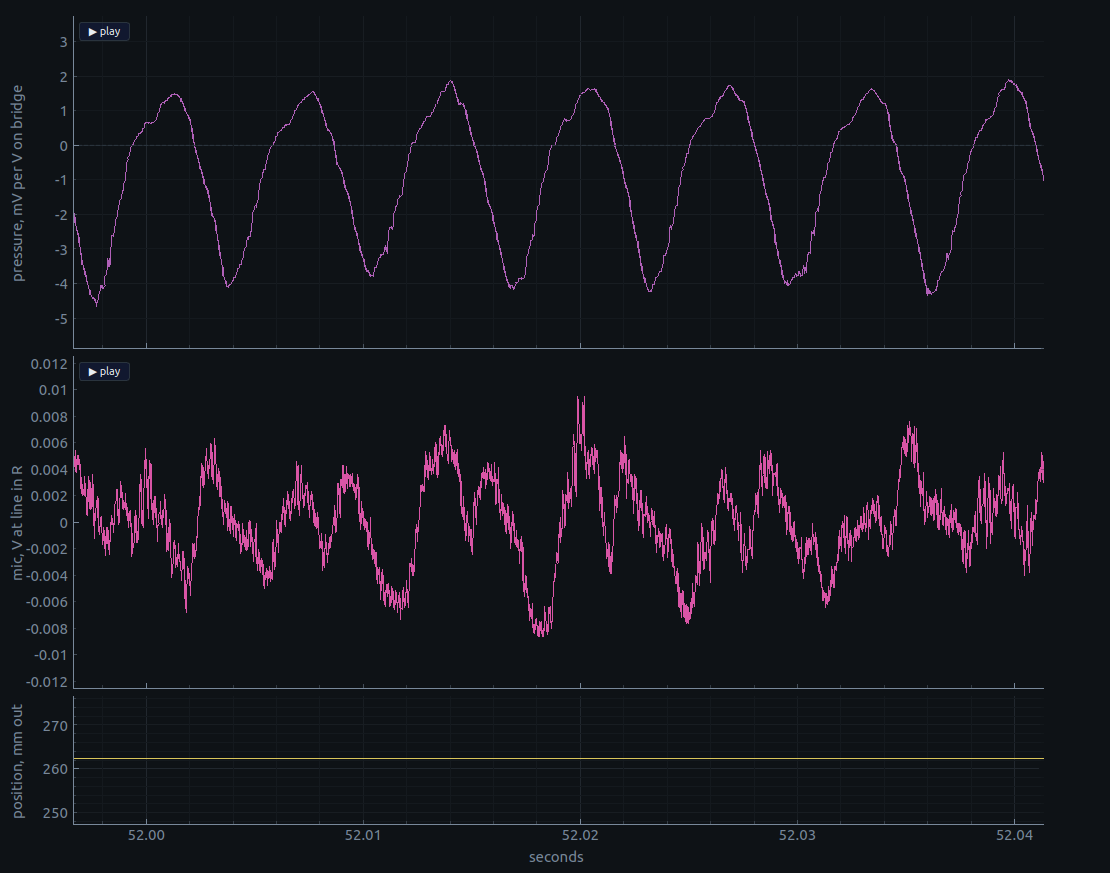
The pressure waves are reasonably consistent. but for whatever reason the microphone signal has much more variability. Here is a time slice from a bit earlier in the same run, but with the motor at the same position:
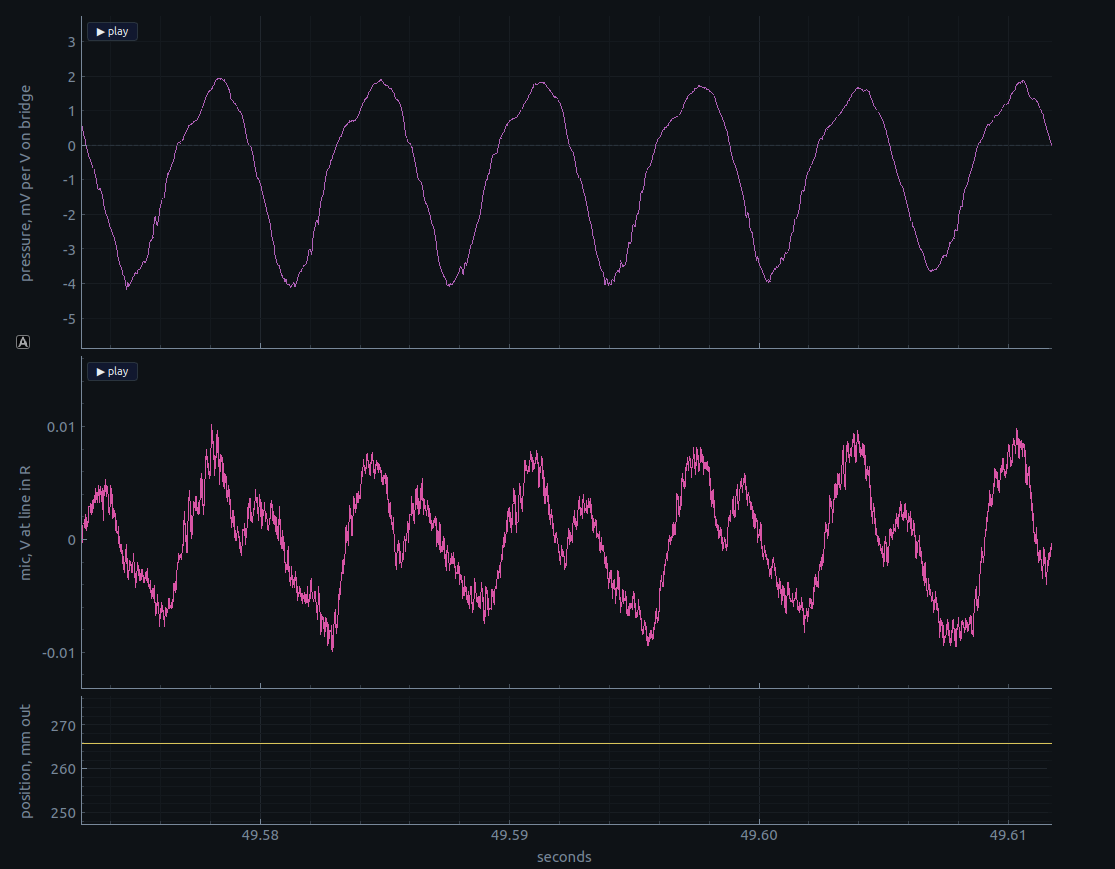
This is a bit better, but still not great.